
South Side Weekly Article and Interviews
Recently, I published an article in Chicago’s South Side Weekly. The title is “Chicago Millenials Discuss How The City Has Been Depicted On Screen,” which I interviewed people from the south side of Chicago to catalog their views on how forces from entertainment, news, and music have impacted the perception and representation when it comes to how the south side of Chicago is viewed. This is the beginning of a series I am creating that looks to analyze all forms of media and gain a new understanding. In the article, we start from the 90s and go through the Bulls Dynasty, the superpredator craze, Obama and Drill, and conclude with modern streaming shows. Due to timeliness, there are multiple points I couldn’t get to, and I wanted to add them and tell my perspective, as well as offer you the chance to hear the interviews in their entirety.
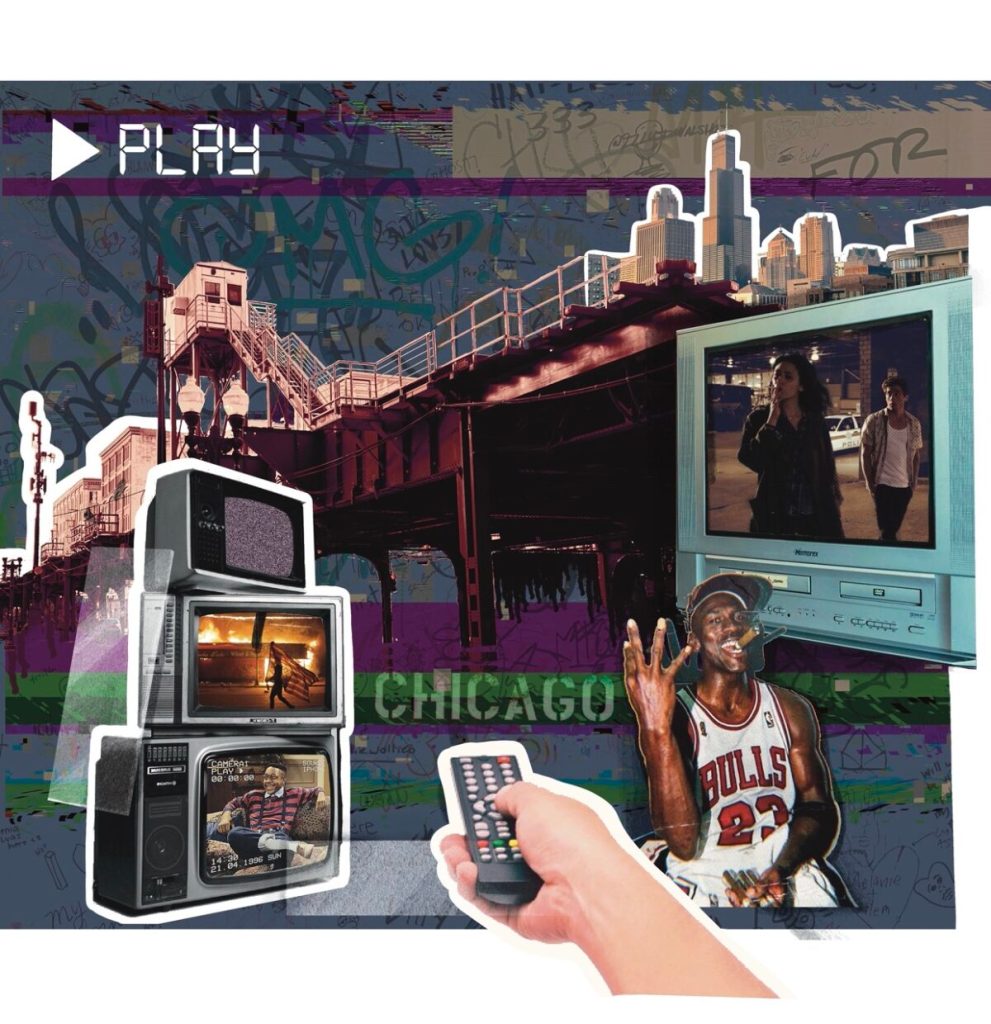
Image Contributed By South Side Weekly
First, I would like to introduce the interviews that the articles synthesized into one narrative piece. First, We have Jeremy Jones, who is a DJ, producer, and creative who lived outside of Chicago briefly:
Next, we have Brittany Norment, who is a social marketing and communications consultant who lived overseas before settling in Englewood:
Finally, we have Melanie Shaw, who is a professional cosmetologist and make-up artist who has worked on different shows:
Each brings a unique perspective and experience, and their experiences couldn’t fit into my article, so I felt an urge to make it available to the public.
To Ohio and Back
After this article was published, I felt something was missing. The listener could fill that hole throughout the interviews, but the reader won’t be able to piece it together. That missing piece is my perspective since I am a Chicagoan from the south side. This story was created because there is often a lack of truth regarding media, regardless of whether it’s news or a sitcom. To be fair, I will follow the same narrative used with my interviewees so you can further understand my perspective.
During the 90s, I wasn’t often aware of Chicago shows, but music and sports always stood out to me. Michael Jordan and the Bulls were a point of pride for my family, and I heard the adults constantly talking about how Chicago was the best. By best, I figured it meant that in all things, and I applied that to all aspects. That carried over to music, as I grew up listening to Midwest legends like Bone Thugs and Harmony, but Crucial Conflict, Do-or-Die, and Da Brat are parts of Chicago I would take with me after we left in ‘97.
My family left the city in ‘97 because we were coincidentally in the middle of the gang wars and with all intentions. I had family members who were part of the commotion, and with the 3-strikes law coming into effect after the superpredator craze brought new legislation, my mother knew we needed to change the scenery. I had already been arrested, and my brother was at the beginning of a frustrating few years when we became familiar with the system. But, mostly, we had close calls with the violence that the news media had been talking about, and it made my experience of the city seem like a game of whack-a-mole, making Ohio look like an excellent avenue for a different life.
During my time in Chicago as a youth, television was always a way to feel normal. While music allowed me to validate that I went through what many would view as desolate, television allowed me to escape. Shows like Married With Children, Roseanne, Full House, and Family Matters showed me that there was an alternative lifestyle that was normative for the majority of society. At the same time, films like Lean On Me, Boyz in the Hood, and Menace to Society reinforced the plight that I was born into. Family Matters, and more specifically Urkel, was a show that I enjoyed because it was set in Chicago and because I had been coined “Urkel” by many of my family members. Though I hadn’t manifested my inner nerd, I later understood why family members projected his character on me. However, my time in JDC after a wild weekend at Ford City Mall would never let you know. The move to Ohio was an opportunity for that part of myself to manifest fully, though it wouldn’t happen in the way it would seem.
Moving to Ohio led me to foster care. Being taken away from my family in 2001, 4 years after leaving Chicago, gave me time to reflect on my experience as a Child of Chicago and a child of the hood. The system had spared me from incarceration but introduced me to being a ward of the state in other fashions. My time in foster care involved being distanced from my Chicago upbringing, and the only thing I could remember was the extremes. The extremes of summertime Chicago and enjoying the spray of fire hydrants and the footwork contests; shoveling snow in the winter and making enough money to rent a few games while commuting on the bus; seeing another student shot during recess during a gang shooting; finding a dead body near the apartment complex I lived while playing with my action figures. The distant memory of Chicago was a distant view of a traumatic relationship, and being adopted by conservative white parents reinforced all the bad memories. However, the seed of my love for my city will always remain.
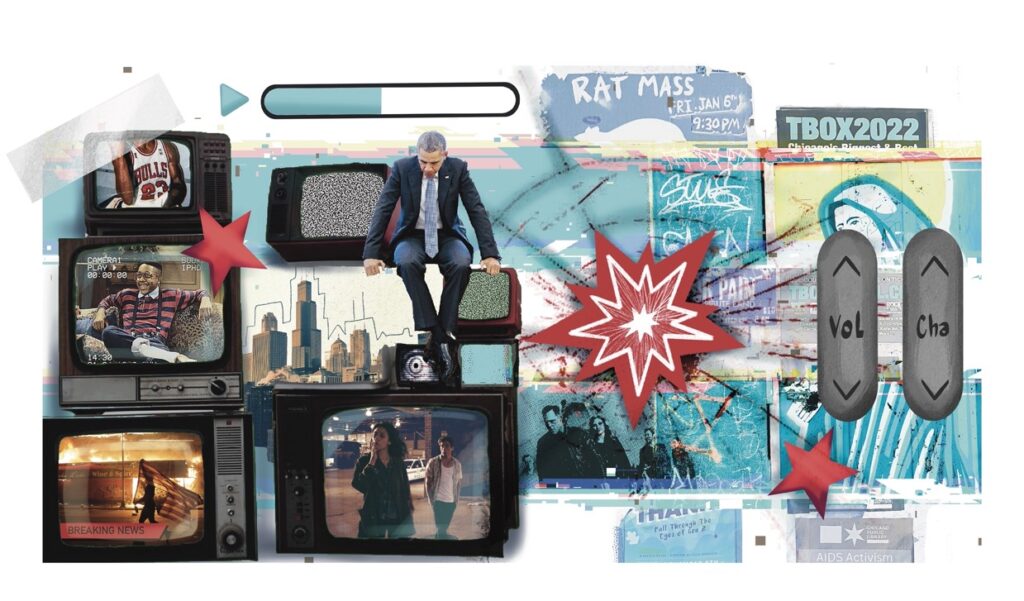
I graduated high school in 2007 before I became aware of Barack Obama. During high school, I developed an odd hobby of listening to radio talk shows, specifically Rush Limbaugh, George Noory, and Micheal Savage. These conservative talk show hosts were my undertaking, but the world they spoke of was reinforced by my foster parent’s daily viewing of Fox News. I had heard and believed in the many conspiracy theories and reactionary takes on the culture war as any young libertarian was willing to consume. When Obama came virtually out of nowhere, I saw myself in him not only because I was Black but also because he was from Chicago. My memory of the trauma of the city began to chip, and memories of taking part in spelling bees, commuting to a magnet school on the north side, being in diverse communities where racism wasn’t normalized, going to a beautiful downtown to see The Lion King all started to return. Around this time, I began to notice a dissonance when it came to the conservative, reactionary media I was consuming and the potential that the City of Chicago could produce someone like Obama. When I went off to college, living in Michigan for the next couple of years, Obama’s presidency became a fixation of mine, and taking notes on the news media made me think about how what I consumed dictated how I perceived reality.
After living in Michigan until winter 2009, I traveled the country for a year and then moved back to Ohio. At first, I moved to the small town where my foster parents, who eventually adopted me, lived, but my media awakening coaligned with my spiritual awakening. When I first met my foster parents, I thought it could be anywhere between Fullhouse and Roseanne since this was a white family, and I had made some significant assumptions about what was expected in a white family. It was more like Married With Children, except I never had the freedom of those kids, instead I still felt like a kid from the hood movies trapped in my Blackness. Sports were my outlet, and though I excelled in them, my parents wanted to take them away from me. This led to my emancipation, a complicated legal process of becoming independent from my guardian, and my eventual state championship and college scholarship. When I eventually went to Eastern Michigan University with a full scholarship, the lack of parental support led me to rely on my Chicago Hustler upbringing, which ultimately led to me giving up my scholarship, dropping out of college, and, after a failed engagement, I joined the magazine crew. If you haven’t seen American Honey or heard about Mag Crew, just know that this was almost the same path if I stayed in Chicago and sold drugs. I’m saying all this to say I moved back to the small town I’m from and had my final falling off with my adopted parents, as I had been on a journey of self-discovery, and then I reconnected with my birth family in 2011. This is a longer story I don’t want to tell at this moment.
My birth family left Chicago in ‘97 and settled in Dayton, Ohio. I was taken away because Ohio has an entirely different political landscape from Illinois, and DCFS did less to support keeping the family together than it possibly could. With that said, my reconnection with my biological family came with its ups and downs, but the consistent thing was my mother loved me, and we were some Chicago niggas. My family would get Italian Beef Kits shipped down, had boxes of Vitner’s Krunchy Kurls, and stood out due to the bravado you learn from coming from a big city. Anything and everything in Chicago is what we consumed, and that was noticeable with my “new” little brother’s music choice. My little brother claimed Chicago, though he was born in Dayton and was my first introduction to Chief Keef. My initial reaction to Keef’s music was similar to how I initially reacted to Gucci Mane; I thought it was straightforward Dr Seuss-type rhyming and couldn’t relate. If you listen to Chief Keef and Gucci Mane and truly analyze their lyrics and songs, you get an introspection in the mindset of living in a world of drill and trap that one can safely take part in through music. When my brother introduced Chief Keef, I wasn’t ready to understand it until my eventual return to Chicago in 2013.
By 2013, 6 years after HS, I had become a different person; part of that was my choice of media I consumed. I was a news and politics junkie, not only reading newspapers but listening to talk radio and podcasts. I left my libertarian world when I noticed my favorite talk show host had ad hoc included Obama in their grand conspiracy theories, the worst being that he was the anti-Christ who was behind the Illuminati. I noticed the rise in racism in my conservative family. Then I saw it among my friends, but how news media had hyperfocused on Chicago since Obama came into office brought me to a breaking point. The local news in Ohio would cover neighborhood shootings in Chicago on the nightly news as though it wasn’t a couple states away; Chicago politics, long known as the corrupt machine, became a dialogue that was brought up on talk radio and a focus on the rising drill scene was seen as a vindication of the media’s view of the true nature of Chicago. Through all this, I had the opportunity to move back to Chicago for the first time since ‘97, and my initial reaction was not to go because I only saw it as a dangerous city. My sister wasn’t going to have that.
Back Home
I am one of 8 kids, and I’m right in the middle. One of my older sisters wasn’t going to let me let my fear consume me. My traumatic memories, the ideas of Chicago you see on the news, and the images that are pumped out by music and media were all painting a city where the only option that I would have is a type of Wild West. My sister saw how I always had a job and was living the life of the straight and narrow, and she told me that “Chicago isn’t like that.” She told me how, if you were willing to work, there were all types of jobs in Chicago, colleges all over the city, and how someone as “smart” as me would get gobbled up in the town. She told me how people who struggled there and lived the street life did so despite all the city’s opportunities, pointing to how they didn’t apply themselves. See, my sister would go to Chicago and work a seasonal job and then come down to Dayton with all the money she saved and live it up. My family heard how I was scared of the city and told me that I would do great in the town because Chicago does great things for people who apply themselves. My family left Chicago because we had people involved in the wild gang stuff of the 90s who needed a break, but we still had family who lived there doing excellent compared to the $7.25 hellscape known as Ohio. The pep talks I got in the fall of 2013 had me back in Chicago before the year was up.
When I returned to Chicago, I was amazed by how much hustling there was, how many educational and civic opportunities, and how beautiful the city was. I’ve been accepting media narratives since I turned my political brain on and even before through entertainment, yet I never questioned where I was getting opinions from. The talk shows, radio hosts, and conspiracy theorists were easy to eliminate from my diet because the racist undertone and plain ole boneheadedness wasted tons of my time understanding how the world worked. But when it came to reputable news sources and national narratives on the city, I had no clue how skewed to one perspective it was, especially when it came to local news.
In Ohio, the local news was owned by Sinclair Broadcasting Group. Since ‘95, they have become one of the largest broadcasting networks in the nation, and upon the Obama Campaign, my local news had included the random coverage of crime in Chicago on the evening news, which included conservative messaging that continued into the Trump campaign. One of the eye-opening moments for me was when “Last Week Tonight With John Oliver” included a segment that focused on the impact of Sinclair and its ownership of so many news stations and how that made a droning choir of repetitive messaging that could create a specific narrative even though it was coming from local news. The commonalities of the Sinclair Broadcasting Group-funded local news network and the network-run Fox News network greatly impacted what I was willing to believe before I moved back to Chicago and got to experience what my city was really about.
Upon my return, I quickly realized the city had much more to offer than my news consumption and the images I came to internalize through my choice of music. Chicago was a city of dreams for someone like myself and a city of boundless humor. The hustling nature of Chicago jolted me when I first interpreted what the local loud-men and square-men were selling; the monthly mooning of the Trump Tower was a ritual I began to take part in after his election; the fact that the Wiener Circle was a caricature of what it was really like to order some food at tons of different chicken spots on the south side. The humor of daily life jarred me, and the beauty of the people changed my perspective immediately when I saw the number of block parties, mutual aid initiatives, and school programs. Chicago is a dysfunctional but loving community, and to only see one representation of it on TV was a flaw of the individual who decided not to take the blinders off.
Being Picky With Media
Though shows like Family Matters, Steve Harvey Show, and Good Times were all that I felt spoke to my life experience in Chicago, I never felt like the show’s intentions were to talk about life in Chicago but life from different socioeconomic experiences of Black life. Each of these shows had its impression on me. Still, I think Family Matters did something that I feel Lil Bill better explains in his video “The Black Sitcom Conundrum,” where he explained how shows like these try their best to sell capitalism to us. He concludes they fail to prepare us for the reality of Blackness in America. Television shouldn’t be where you get life advice, but I argue television should reflect the realities of life and offer models of existence that make sense. As an adult in 2014, I finally started to utilize streaming services, and just like music streaming services allowed me to listen to more music, these services allowed me to watch more shows since I was too busy to have free time every day/week to watch a specific show as I have always been a hustler and general contracting was what filled my financial needs when my labor didn’t pay the bills.
Around this time, I started listening to Chief Keef and gaining a new perspective on Chicago. The violence that led me out of Chicago was still relevant, though I will say that the gang lifestyle that drill music speaks of is a choice for many. Granted, I was lucky to leave many teens and young adults who were entrenched in communities where gang violence was prevalent, even if a large majority of Chicagoans weren’t taking part in that culture. I understood that this young man was speaking his truth, and the pictures he painted reflected his experience, yet this wasn’t what I was experiencing as a college student who volunteered at a food pantry and ran an after-school program. Proximity is the nature of the city, and the many perspectives of Chicago live next door to each other. One of these perspectives that I also couldn’t jive with was on a hit show called Shameless.
Shameless was the 1st of the many shows I feel don’t speak to the truth of life in the city for me, though I know that they connect with many. I always questioned the whiteness of the south side Chicago family, even though I could picture the events that happened in their life in communities like Bridgeport. My issue was why would a show about modern Chicago’s south side focus on a white family instead of a Black or Latino family. It was a show that humanized South Side life to an audience that had never experienced it. Still, as a Chicagoan, I felt it was a pretty particular narrative.
The next show I tried was The Chi. This show had beautiful filming locations on the south and west sides that made me connect with the show, and its depiction of Black Chicago made my biased little brain gravitate more toward the show. My criticism of this show is that it made Black Trauma a melodrama, which I felt at any point could eventually branch out to the One Chicago Franchise, where different emergency services dealt with the crime and drama of Chicago. These shows reminded me of my biological mama’s stories she would watch or my adopted mom’s obsession with CSI. Where was the show that showed the randomness of south side Chicago that wasn’t mired in drugs, violence, sex, and crime?
Enter South Side
Obviously, with the fact that my published work ends on a note where I have my interviewees talk about the South Side, I’m sure you are seeing a bias. I’m not coming at this from a critic’s perspective on sitcom media analysis but from a Southside Chicago perspective of media analysis. Where the sitcom formula of the 90s focused on often middle-class families and their PSA for each episode, the more modern shows used a formula of chaotic interpersonal relationships with a sprinkling of hedonism and ego; South Side took that formula and gave us something closer to The Office, Atlanta, and long-form sketch comedy shows. Within my first year of returning to Chicago, I became a student at Chicago City Colleges, and the way that the pilot of South Side used being a graduate of community college as their first introduction to the main characters immediately had me hooked. Though I went to Wright College, I still feel that not-so-satisfying pride whenever I pass Kennedy-King College and remember how, upon my return to the city, I started taking hour-long commutes to be something more significant. And though it wasn’t working for a moving company, I eventually used my associate’s degree to mow yards with my dad as I continued to dream big.
South Side encapsulated the humor and hustler spirit that Chicagoans are known for. Lil Rel Howard made fun of one of the main characters that it took him eight years to finish community college; a petty Harold’s worker roasts a customer for asking for too many mild sauces; the alderman pretends to be from Englewood, Chicago but is really from Inglewood, CA and is exposed; a turf beef is started over selling popcorn outside the movie theater; the police have a protection racket for the rent-to-own appliance store. Amongst all these wild interactions, you find characters who aspire to be sci-fi authors, hood entrepreneurs looking to get into the crypto-currency business, and gang members who don’t stray from speaking philosophy. This show reminded me of riding bus #4, where I would be being sold socks in one instance, witnessing a roasting session in the next, and having the neighborhood vagrant educate me on the corruption of the Daley family in the next moment. The show’s spirit spoke to the South side in a way that could only be done by a team of writers, mostly from Chicago.
Conclusion
With all this said, the media is responsible for the subject and the object of its production. The represented topic should feel properly presented and can dignify and humanize while still taking artistic liberties. Even still, the audience doesn’t need to be lectured like a 90s PSA, but the truth should be unveiled naturally. When consuming all forms of media, one should understand that bias is inherent and that there are always underlying powers at play. Yet, there should always be a distinction between news and media. News should tell the truth, while entertainment should expose it, but it is up to the audience to wade through the nuances of reality and perception.
 CTGV
CTGV 